Tree roots are one of the most common causes of recurring sewer blockages in Australian homes, particularly in established suburbs. Roots are not out to destroy your pipes. They are simply following moisture and nutrients, and a sewer line is a reliable source of both.
How roots get into sewer pipes
Older sewer pipes, especially clay, are made in short lengths joined together. Those joints can loosen or crack over time. Even a tiny gap lets in moisture vapour, and fine roots follow it. Once inside, the roots thrive in the warm, nutrient-rich environment and grow into thick mats that catch toilet paper and other waste. Over time this can restrict the pipe and eventually block it completely.
Roots can also widen existing cracks as they grow, so a small defect can become a bigger one.
Symptoms of tree roots in your drains
- Slow drains throughout the house, not just one fixture.
- Gurgling from toilets, basins or the shower.
- Recurring blockages that keep returning after being cleared.
- Sewer smells around the yard or near drains.
- An overflowing gully trap outside.
- Unusually lush, green patches of lawn or garden over the line of the pipe.
These signs can also have other causes, so the only way to be sure is to look inside the pipe.
Finding the problem with a CCTV inspection
A CCTV camera inspection lets your plumber see inside the sewer line. It shows whether roots are present, where they are, how severe the problem is and whether the pipe is cracked, offset or collapsed. Knowing the condition of the pipe is important, because the right fix depends on it.
Your options
Jetting
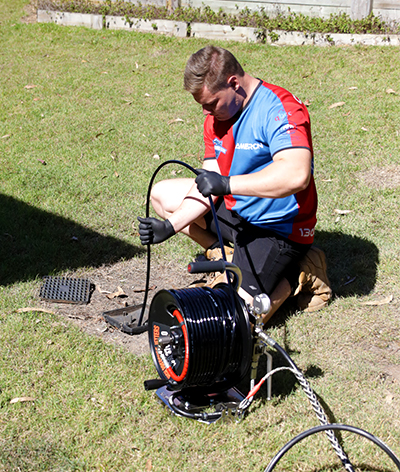
High-pressure water jetting, sometimes with cutting heads, can clear roots from inside the pipe and restore flow. It is effective for clearing a blockage, but it does not repair the opening the roots came through. If the defect remains, roots can grow back, so jetting may need to be repeated.
Spot repair
If the camera shows damage in one specific location, a localised repair may be an option. This can involve excavating and replacing the damaged section.
Pipe relining
Relining involves installing a resin liner inside the existing pipe, creating a new, smooth pipe within the old one. It can seal joints and cracks so roots have nowhere to enter. Learn more in our guide to pipe relining.
Replacement
If the pipe has collapsed or is severely misaligned, excavation and replacement may be the better choice.
What you can do
- Do not try to dig out or cut roots from a sewer line yourself. Sewer work should be done by a licensed plumber.
- Be mindful when planting trees near sewer lines, and ask for advice about the location of pipes first.
- If you have had repeated blockages, ask for a CCTV inspection instead of another quick clear-out.
- Before any work, ask what the camera found so you can see the problem for yourself.
We give a fixed-price quote before work starts. If sewage is backing up, our emergency plumbers are available 24/7.
Suspect tree roots in your drains? Call The Plumbing Gang on 1300 671 525 or see our drain services.